PawSpot: Built to Outgrow—Static Site to Headless CMS
A new directory platform needed to launch quickly to validate the market, but the architecture had to support growth when user adoption demanded more sophisticated content management. We designed a two-stage platform evolution: Stage 1 delivers speed to market with static Next.js. Stage 2 introduces headless Drupal when content management demands scale.
Key metrics: Two-stage evolution strategy, nationwide cattery coverage, headless Drupal architecture planned from day one, fast static performance for Stage 1.
The Challenge
The platform needed to:
- Launch quickly - Validate the market without over-engineering for uncertain adoption
- Plan for scale - Architecture had to support eventual headless CMS without rebuilding from scratch
- Handle mixed data sources - Owner submissions, curated research, and aggregated directories with inconsistent formats
- Deliver intuitive search - Non-technical pet owners need instant filtering without reading instructions
- Prepare for growth - When adoption grows, content editors will need a proper CMS, not static file editing
The architectural challenge was building for known evolution—starting simple but designing the data model and API layer to support headless Drupal when scale demands it.
The Approach
We designed a platform evolution strategy that delivers value immediately whilst architecting for known growth.
Stage One: Static Next.js
Launched with static site generation for speed to market:
- Excellent performance with minimal hosting costs
- Fast validation of product-market fit
- Simple deployment and content updates via build pipeline
- Established data schema and API structure for future CMS integration
The architecture treats listings as structured content from day one—not just static pages. This enables seamless transition to headless CMS when scale demands it.
Content Model Architecture
Designed data schema knowing it would become Drupal content types:
- Standardised cattery listing structure (pricing, amenities, location, reviews)
- Normalisation pipeline for mixed data sources
- Validation rules matching eventual CMS requirements
- API-ready data structure for frontend consumption
The content model was designed for Drupal compatibility from day one—not retrofitted later.
Search and Filtering
Built intuitive interface for stressed pet owners:
- Instant filtering by price, location, and amenities
- Clear visual feedback showing active criteria
- Results update without page reloads
- Mobile-optimised for on-the-go searching
Stage Two: Headless Drupal (Planned)
When user adoption grows, Stage 2 introduces headless CMS:
- Drupal manages content, Next.js frontend unchanged
- Content editors get familiar CMS interface
- Static generation performance maintained
- API layer already designed for this transition
The platform evolution is planned, not reactive—we built knowing they'd outgrow Stage 1.
The Results
Built for evolution—architected knowing what comes next.
- Fast time to market - Launched fully functional directory with static Next.js whilst planning headless Drupal transition
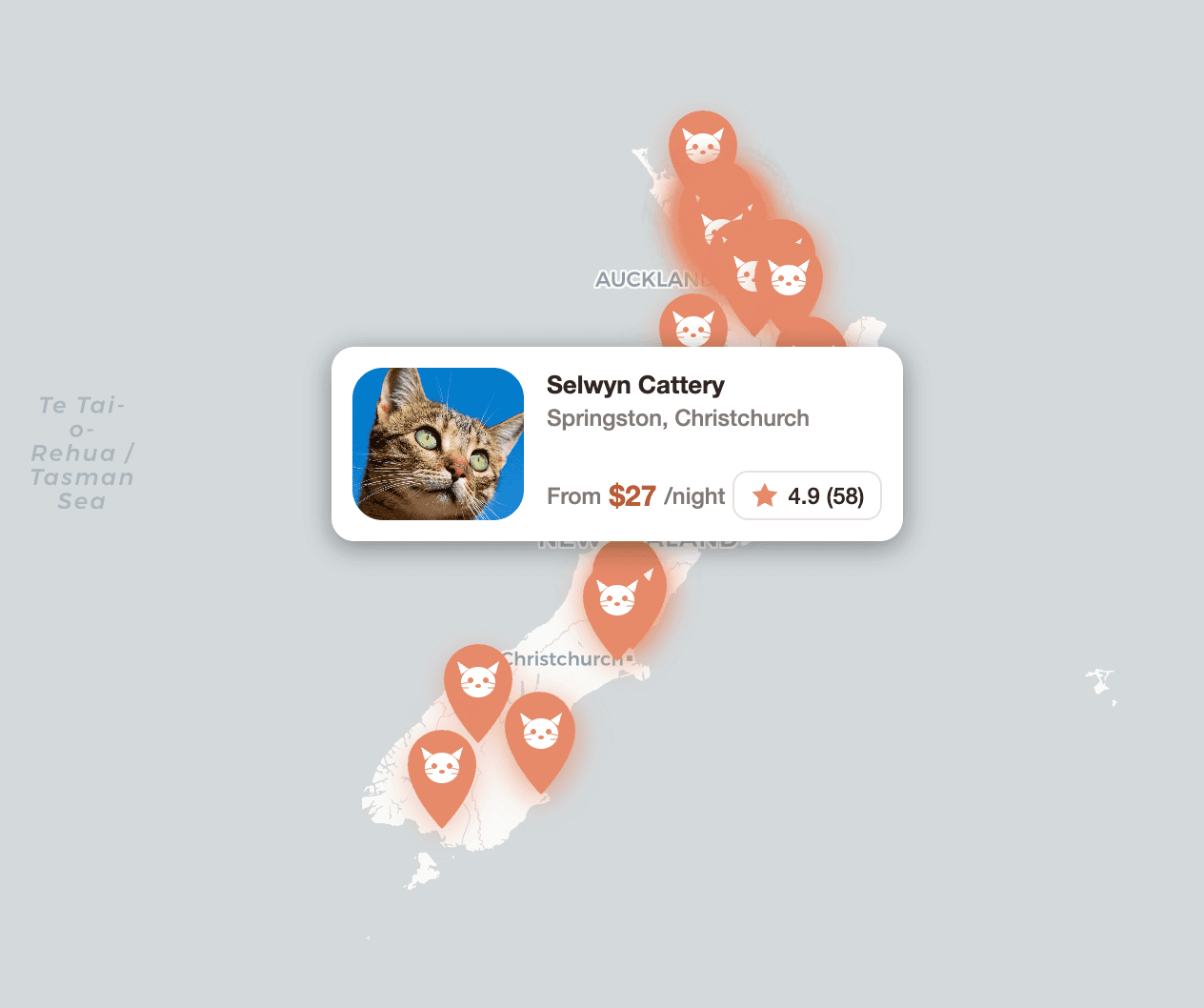
- Nationwide coverage - Unified cattery data from multiple sources into single searchable platform
- Intuitive search - Filtering designed for stressed pet owners, not technical users
- Architecture ready to scale - Data model and API layer designed for headless CMS from day one
- Planned evolution - When user adoption demands sophisticated content management, Stage 2 transition requires minimal frontend changes
The platform demonstrates building with foresight—launching quickly with static generation whilst architecting for the inevitable transition to content infrastructure when scale demands it. Most businesses outgrow their initial approach. We built knowing they would.